How would you describe Unequal Loves?
Hard to describe your own book – at least for me.
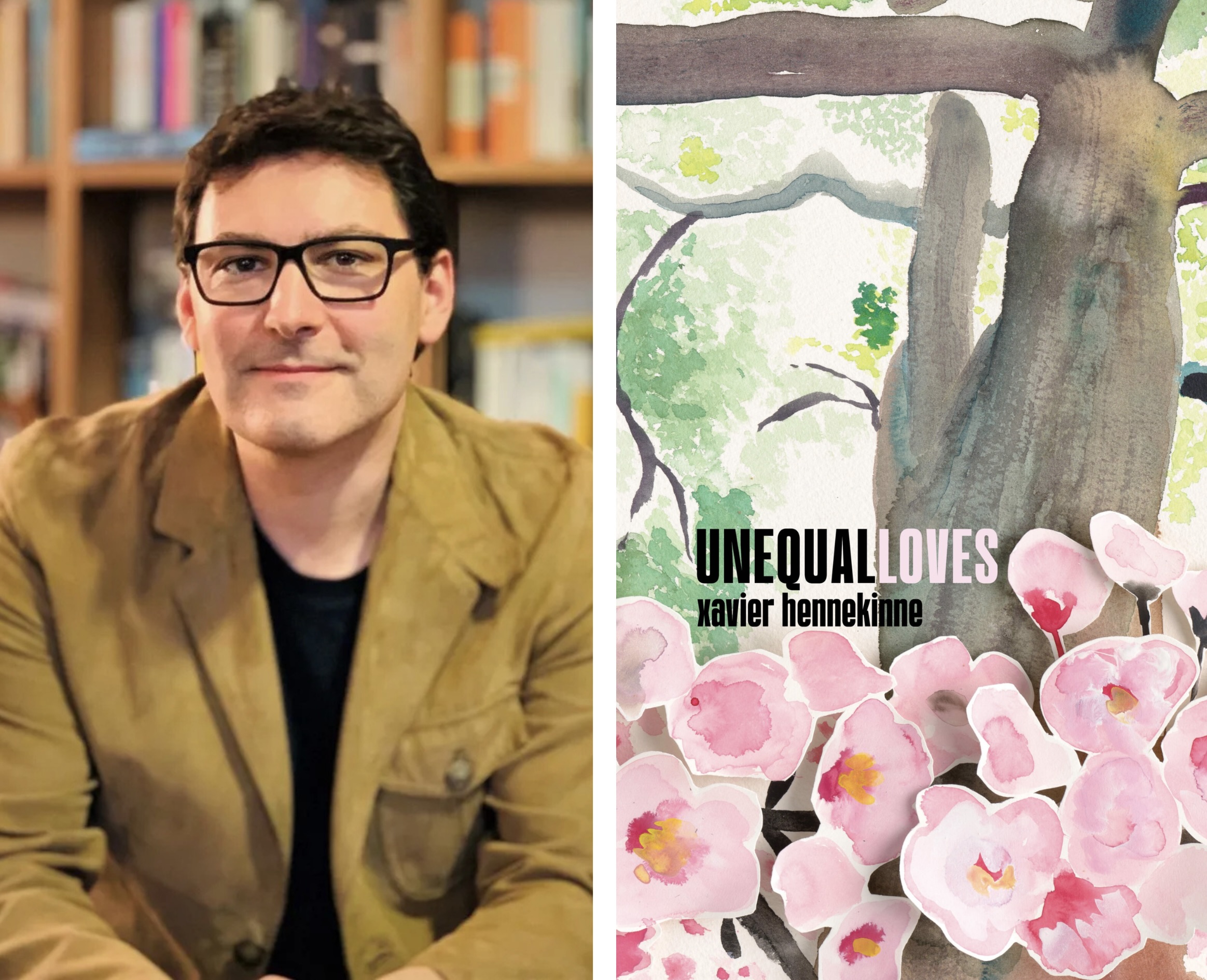
I’m drawn to writing stories that inhabit the private spaces between people: a couple, what they say to each other, what they do together, what they leave unsaid, what they secretly think… the small crises that shape them. I want to get to the heart of their intimacy. Unequal Loves is my attempt to trace the fault lines between desire and memory, to explore how certain relationships never quite let us go, and how, in the quiet distances of travel, we sometimes meet the selves we thought we’d left behind.
What drew you to write this book?
A sense of nostalgia.
I first wrote ‘The New Capital’ [a chapter of Unequal Loves] as a short story after a holiday in Japan. I kept thinking about the places I had visited, the people I had met, the experiences I had had – I had found everything beautiful; I wanted to be back there.
At the same time, I had been reading all the Yasunari Kawabata I could find in English. Eventually I ran out of his novels, but I longed for their atmosphere. Writing that story became a way of returning to Japan, of trying to recapture something of the quiet, delicate mood I found in Kawabata’s work.
I was living and working in Manila then, and every day at lunchtime I would slip away to a quiet café near my workplace and write for an hour or so. I was in my own Japan bubble, following an imaginary couple, far from the concerns of my professional life.
Can you share your experience of writing this book?
I wrote this book in bursts between 2009 and 2012.
After finishing ‘The New Capital’ and publishing it in the Griffith Review, I found myself missing the atmosphere of that story – its characters, and especially the aunt. I felt drawn back to them, as if the story wanted to be expanded.
At the end of 2010 my wife and our eldest son, then about a year old, relocated to Sydney. My job at the time involved missions to places in humanitarian crisis. I would travel for several weeks, then spend a few weeks at home, and so on. In those stretches between trips – Haiti, South Sudan, the Congo, Sri Lanka – I was learning how to be a father. Most mornings I would sit in a local café and write for a couple of hours, immersing myself in a bubble where there were no war zones, no emergencies, no uncertain new parenthood. Just the story.
I didn’t write while I was away; the work absorbed me completely. I’ve always needed routine and quiet to write. So the novel grew in those intervals at home. The stories gradually became chapters, and I finished the manuscript in 2012. I remember rereading the whole thing one weekend in my hotel room in Geneva, where I was on assignment, half-watching the London Olympics on television.
Then, in 2019, I wrote the chapter ‘The Holiday House’. I felt the protagonist’s youth needed further exploration, and that chapter became a way to return to him once more.
Who is this book for?
Looking back at how I wrote the book, I suspect I first wrote it for myself. But let’s not be facetious, the book is now out in the world, and I do hope it finds its readers. I imagine it will speak to those who enjoy intimate, character-driven literature. In Australia, Frank Moorhouse was a master of that terrain.
When and where would be the perfect time or place to read this book?
In bed, with your lover. Read passages to your lover.
What do you hope readers will take from this book?
I would be delighted if the book stayed with a reader for a little while. If, after finishing it, they found themselves thinking back to certain scenes, visualising the places and the characters, turning over moments in their mind. I hope it invites a quiet kind of reflection – that readers might recognise something of their own experiences or emotions in it, or feel a small echo of their own inner life. And if the book lingers with them, even briefly, that would feel like a real gift.
What prompted you to start writing and when did you start?
I started writing when I was twelve or thirteen – mainly letters to friends I’d met during the summer holidays. Some of them never replied, but I kept writing anyway.
I often made things up in those letters. By the time I was sixteen or seventeen, I realised it was probably better to keep the invented parts out of my correspondence, so I wrote my first short story instead.
I was also reading philosophy and writing essays, and I took writing seriously from early on. From the age of twelve, I wanted to write well, it mattered to me. Reading transported me, and writing soon did too; the two felt inseparable. Sometimes, strangely enough, even my own writing would carry me away.
Writing became the one activity I could return to every day, the one thing I could get lost in. And when I wasn’t able to write regularly, I didn’t feel quite right. That’s still true today.
Can you share one thing you have learnt the hard way when it comes to writing?
Publishing is not the end game. Writing, the act of writing, is what truly matters. I admire writers who every day write in their journals. Writers write, even when they have nothing to publish.
I often meet young writers who seem desperate to see their work in print. I’d offer them two thoughts: first, wait. See whether the piece you’re working on is still something you’d want to publish in one, five, or even ten years. And second, the thrill of publication fades very quickly. There’s a real ‘all that for that?’ effect.
The deeper, sustained reward comes from capturing something – an idea, a feeling – on the page. When you manage to pin down the thing you were reaching for, even briefly, that is the satisfaction that lasts.
What is the best investment you’ve made in your writing?
Time. Giving time to the work. When I was younger, I believed that unless I had a large stretch of uninterrupted hours, a whole day or even a weekend, there was no point in sitting down to write. I thought that unless I quit my job and took a year or two off, I would never finish a novel. With age, I became better at stealing an hour or two almost every day, at slipping into those small bubbles of focus where I could put pen to paper and disappear into the work. Those stolen hours have been the best investment I’ve ever made in my writing.
Favourite bookshop anywhere in the world?
Hard to choose just one. But I recently returned to Solidaridad in Manila, in the Philippines. The shop was established and run by Francisco Sionil José until his death. Sionil José was a giant of Philippine literature as a novelist, essayist, and publisher. The shelves hold rare first editions of major American writers, all of José’s own works, and a wealth of Filipino and regional literature, including writers you may never have heard of but will immediately love. It was there, years ago, that I first discovered the Russian writer Daniil Kharms in English translation, among many others.
What book(s) are you currently reading?
I was listening to a song the other day and it mentioned the name ‘Svengali’ and his ‘pulling on strings behind the scenes’. The name sounded familiar, but I couldn’t connect it to anything I knew. I looked it up, intrigued, and I’m now reading George du Maurier’s Trilby, where Svengali is a character.
I have also started a couple of books recommended by Gila Walker, one of Gazebo’s translators from the French – Adam et Ève and Pardon Mère, by Swiss writers Ramuz and Jacques Chessex, respectively.
What’s the last book you read that you loved?
Aside from the books published by Gazebo Books, which, as their publisher, I naturally admire, the last book I read and loved was François Cheng’s L’éternité n’est pas de trop.
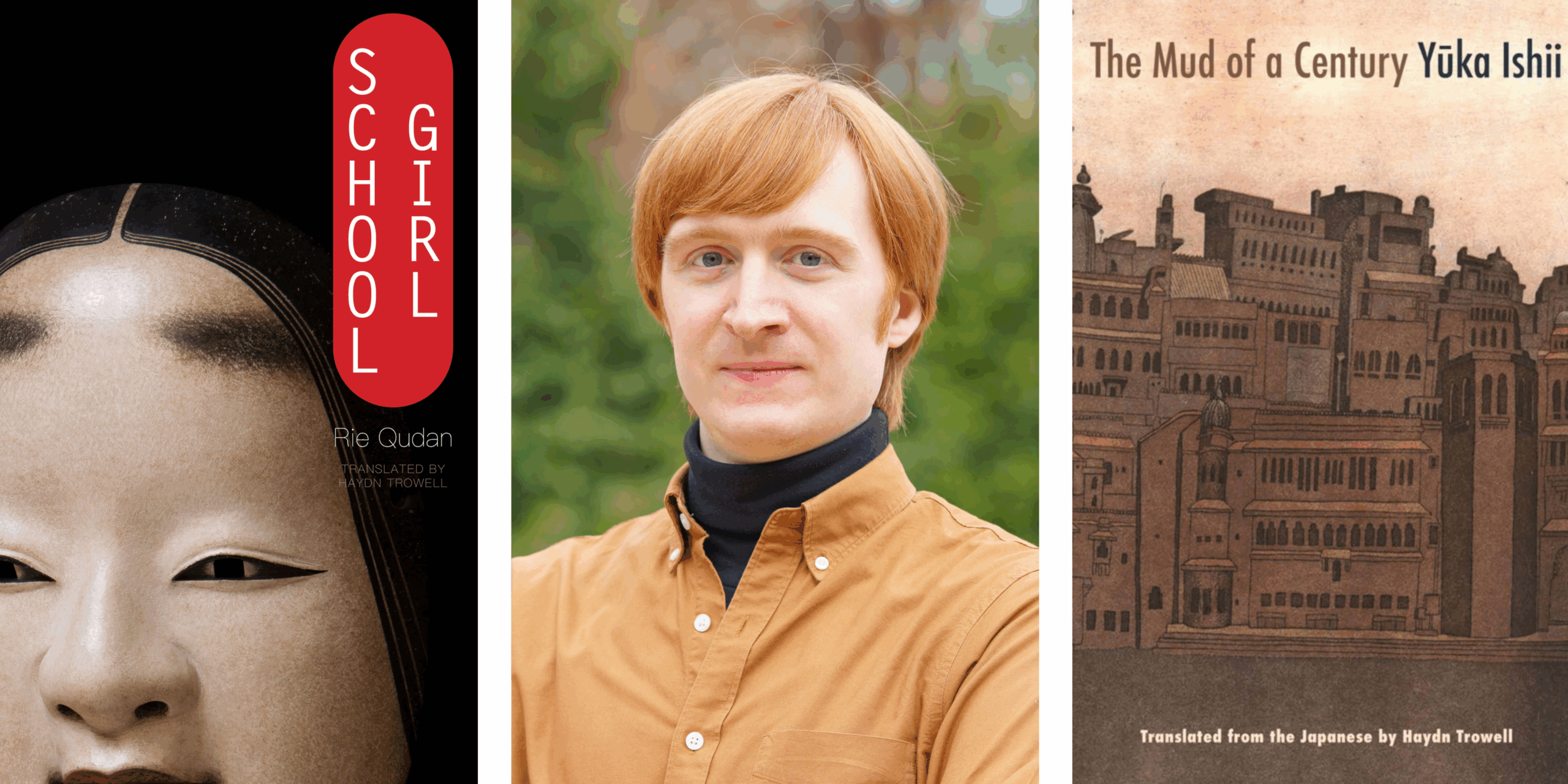
I also recently read Yasunari Kawabata’s The Rainbow in Haydn Trowell’s brilliant translation. It had never appeared in English until Haydn translated it three or four years ago. It was a real pleasure to read a new Kawabata after all this time.